
f The Wittenberg Door

Photobucket - Video and Image Hosting
My Photo
Name:

Commenting on Christendom, culture, history, and other oddities of life from an historic Protestant perspective.

Thursday, March 27, 2014

Considering God’s Gift of Alcohol
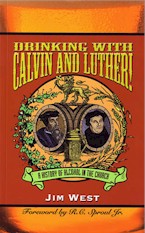
The Master of Cana’s marriage feast says, “Every man at the beginning sets out the good wine, and when the guests have well drunk, then that which is inferior; but you have kept the good wine until now.” The Geneva Bible highlights the expression “well drunk.” Notice: the wine is not only drunk, but “well drunk.” This is different from drinking well. We drink well when we drink to the glory of God and when our drinking does not exceed the limits of moderation. However, the wine is to be “well drunk” too. God’s gifts are not to be used tentatively, as if we are sampling remnants or sipping the king’s drink to discover whether it contains poison. The table that the Lord has set before us must be heartily consumed! (Drinking With Calvin and Luther, 64)

A number of years ago I had the privilege of introducing the Charlton-Heston-looking Rev. Jim West at a conference on Pentecostalism shortly after he published his book, The Glorious Foundation of Christ: The Missing Clincher argument in the Tongues’ Debate. (Speaking as an ex-Pentecostal, I highly recommend this book.)

Before his “tongues” book, Rev. West published a fine treatise titled Drinking With Calvin and Luther! In the book, Rev. West, Professor of Pastoral Theology at City Seminary in Sacramento California, provides not only the theological underpinnings of alcohol’s use, but he also traces its use from the Reformation, to the founding of America, through Spurgeon’s time and beyond. (He also provides a nifty, and funny, beer review.) It’s a profitable read even if you’re a teetotaler like me.

Aimee Byrd, housewife and mother who attends Pilgrim Presbyterian Church (PCA) in Martinsburg, WV, provides some thoughts on the book. Here’s an excerpt . . .

One area that has me thinking is simply the reason why we drink. I’ve often looked at the case for alcohol being such a staple in church history more on the level of necessity. With the poor water quality, drinking alcoholic beverages was a matter of health. And, yes, I’ve always looked at it as a gift from God’s creation that should be enjoyed. But it seems like our evangelical culture would have those who would insist on enjoying their Christian liberties do it in a clandestine fashion. I partake because I appreciate a good drink and I know that a glass will help untie all the knots in my brain at night, but also because it makes me merry. And West wants to emphasize this aspect of the gift from God’s creation.

He quotes the venerable John Calvin, “It is permissible to use wine not only for necessity, but to make us merry” (53). In his commentary on Ps. 104:15, Calvin emphasizes that drinking must be moderate. But “his second consideration may surprise the ignorant, and even shock the pietist; he argued that ‘in making merry,’ those who enjoy wine ‘feel a livelier gratitude to God’” (53).

Click here for the entire review. You can also purchase Rev. West’s books here.

--The Catechizer

Labels:

Tuesday, January 21, 2014

Giving Cliché-Free Thanks

It’s funny the “Christianisms” we pick up as we travel the road to Glory. Sometimes they’re words or phrases that we reflexively sprinkle in our conversations like salt on popcorn (“I felt led . . .”, “Have a blessed day!”, “Has Jesus come into your heart?”, etc.) I’ve been a Christian for more than 20 years, and a thinking Christian for more than 15, but I still fall prey to using clichés—and sometimes they’re clichés I don’t even understand!

For instance, what does it mean to ask God to “bless my food”? I don’t know, but I have to fight not to pray it. I’m giving thanks for His gracious provision, and then I inexplicably throw in this shibboleth. Why? Am I asking for Him to keep my cholesterol low once I’ve finished my Bacon Double Cheeseburger? Do I want Him to keep the Blue Bell Chocolate Chip Cookie Dough ice cream from contributing to my bottom line? Or am I asking that He protect me against any poisons my praegustator might have missed? Your guess is as good as mine.

Diane Bucknell, of Theology for Girls fame, offers some other thoughts on giving thanks and being thankful in her post, Should I Pray Over It. Here’s an excerpt:

We have a friend who used to say, “If it’s under 4 bucks you don’t need to pray over it”. . .

But do I bow my head and pray over a cup of coffee and pastry at Starbucks? Well.., no. Why? I don’t know. Maybe our friend’s humor made a subconscious impact on me.

Whether or not I choose to make a public display of my thankfulness to God may not be as important as making a habit of cultivating a heart that is grateful for everything. To my shame, I don't know how many times I’ve routinely bowed to give thanks over a meal either at home or in public only to resume griping about something right after saying “In Jesus name, amen.” . . .

You can read the entire post here.

--The Catechizer

Labels:

Sunday, June 10, 2012

A Sober Assessment of Reformational Drinking

A number of years ago I had the privilege of introducing the Charlton-Heston-looking Rev. Jim West at a conference on Pentecostalism shortly after he published his book, The Glorious Foundation of Christ: The Missing Clincher argument in the Tongues’ Debate. (Speaking as an ex-Pentecostal, I highly recommend this book.)

Before his “tongues” book, Rev. West published a fine treatise titled Drinking With Calvin and Luther! In the book, Rev. West, Professor of Pastoral Theology at City Seminary in Sacramento California, provides not only the theological underpinnings of alcohol’s use, but he also traces its use from the Reformation, to the founding of America, through Spurgeon’s time and beyond. (He also provides a nifty, and funny, beer review.)

In an article penned for Modern Reformation magazine, Rev. West discusses the Reformers' view of alcohol, which includes their condemnation of the un-Biblical practice of churches replacing the wine with some other drink. Here’s how the article begins . . .

Protestant reflection on the consumption of alcohol has undergone a dramatic transformation since the Reformation. Whether this change stems from the rise of pietism or the triumph of middle-class morality, contemporary evangelical ideas about alcohol are at odds with the views of the Protestant reformers. Attending to the reformers' ideas, then, is important not only for those who would claim to be their heirs but also for a good understanding of what the Bible teaches about alcohol.

You can read the entire article here. You can also purchase Rev. West’s books here.

Labels:

Saturday, December 09, 2006

Think and Smoke Tobacco

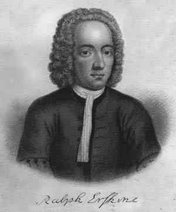
I am both a cigar and a pipe smoker (traditional pipes; not the kind that need water). I’m also a connoisseur of good, Reformed theology. What a treat it is to have these good gifts brought together by Scottish churchman Ralph Erskine (1685-1752) in Think and Smoke Tobacco. So grab your favorite pipe and read on!

Part I
This Indian weed now wither'd quite,
'Tho' green at noon, cut down at night,
Shows thy decay;
All flesh is hay.
Thus think, and smoke tobacco.

The pipe so lily-like and weak,
Does thus thy mortal state bespeak.
Thou art ev'n such,
Gone with a touch.
Thus think, and smoke tobacco.

And when the smoke ascends on high,
Then thou behold'st the vanity
Of worldly stuff,
Gone with a puff.
Thus think, and smoke tobacco.

And when the pipe grows foul within,
Think on thy soul defil'd with sin;
For then the fire,
It does require.
Thus think, and smoke tobacco.

Then to thyself thou mayest say
That to the dust
Return thou must.
Thus think, and smoke tobacco.

Part II
Was this small plant for thee cut down?
So was the plant of great renown;
Which mercy sends
For nobler ends.
Thus think, and smoke tobacco.

Doth juice medicinal proceed
From such a naughty foreign weed?
Then what's the pow'r
Of Jesse's flow'r?
Thus think, and smoke tobacco.

The promise, like the pipe, inlays,
And by the mouth of faith conveys
What virtue flows
From Sharon's rose.
Thus think, and smoke tobacco.

In vain th' unlighted pipe you blow;
Your pains in inward means are so,
'Till heav'nly fire
Thy heart inspire.
Thus think, and smoke tobacco.

The smoke, like burning incense tow'rs
So should a praying heart of yours,
With ardent cries,
Surmount the skies.
Thus think, and smoke tobacco.

Ralph Erskine (1685-1752)

Labels: