f The Wittenberg Door

Photobucket - Video and Image Hosting
My Photo
Name:

Commenting on Christendom, culture, history, and other oddities of life from an historic Protestant perspective.

Tuesday, February 10, 2015

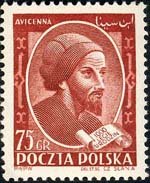
Avicenna and the Law of Non-Contradiction

Many Postmodern thinkers have taken to denying the law of non-contradiction. This law of thought states that A cannot be non-A at the same time and in the same sense.

Despite their protestations, Postmodern-types violate this law when they claim that truth cannot be known. Since they mean for this claim to be taken as true (despite their verbal smoke and mirrors), they are saying that it’s the case that truth can be known and it’s the case that truth cannot be known.

Folly Revealed

With all the ills Islam has brought to humanity, I’ve found something commendable. Muslim philosopher Avicenna (Ibn Sina) deftly shows the folly of denying the law of non-contradiction.

Anyone who denies the Law of Non-contradiction should be beaten and burned until he admits that to be beaten is not the same as not to be beaten, and to be burned is not the same as to not be burned.

Avicenna (980-1037)

I recommend setting this to memory for use next time you encounter someone denying the law of non-contradiction—or if you simply want to recite flowery Islamic prose.

--The Catechizer

Labels:

Sunday, January 11, 2015

The Lazy Atheist?— The Christian Worldview (Conclusion)

In part 1 I mentioned that for a worldview to be considered viable it must be able to make sense of reality. Atheism as a worldview fails to provide a foundation for abstract (non-material), invariant (things not given to change) entities, such as morality, mathematics, laws of logic, and propositions. Moreover, atheism fails to make sense of love and beauty, and is found wanting when it comes to accounting for the regularity of nature.

So what are we to make of it when atheists love, show compassion, demand justice, use logic and mathematics, and engage in the scientific enterprise? Like a drowning man denying the existence of water, they must assume the Christian worldview in order to refute it—for it is Christianity, not atheisim, that comports with reality.

Christianity Provides the Answers

Christianity answers the tough questions:

  • Morality
    Murder (the unjust taking of a human life) is wrong. We know this innately. The same is true with theft, adultery, rape, lying, etc. (Sure, there’ve been variations on these themes, but the themes remain.)

    Morality reflects God’s character. He is holy, righteous, and just. We are beings created in his image; therefore, we are moral agents. It is upon this very foundation that civilization is made possible.


  • Mathematics and the Laws of Logic
    Prove 2+2=4. Most people grab four items, place them next to each other, and then say “two pencils and two pencils equal four pencils.” But this doesn’t solve the problem—it merely restates the equation using a different physical representation.

    How about the laws of logic? Are the laws of logic—the law of non-contradiction (A cannot be non-A at the same time and in the same sense), the law of identity (A is A), and the law of excluded middle (A is either A or it isn’t)—merely human inventions? If they are, we’re doomed. Actually, all cultures assume the laws of logic. Language isn’t even possible without them, and thus civilization would not be possible.

    2+2=4 because that’s the way it is in the mind of God; and the laws of logic reflect His thinking. Again, we think this way because we are His image bearers. Thus, Aristotle discovered (i.e., categorized) the laws of logic; he did not invent them.


  • Uniformity of Nature
    God upholds all things by the word of His power. It is because of this that we see regularity in nature, and it is because of this that we can extrapolate future events from the past. This provides the needed foundation for science and answers Hume’s Problem of Induction. All this without making incredulous claims like everything came from nothing; order came from disorder; life came from non-life; consciousness came from non-consciousness, etc.


  • Propositions
    How much does a thought weigh? How deep into space does a proposition extend? How long is it? Imagine Snoopy atop his red-roofed doghouse. Now, if we opened your cranium, would we find him there? I don’t think so. But if thoughts are material, he must be there! (Perhaps we just don’t have a microscope powerful enough.)

Wrapping It Up

Like the previous post, this is just a thumbnail sketch (and we still didn’t have room to talk about love and beauty)—but at least it’s a start. All claims to explain reality must be scrutinized, including atheism. The ball’s in your court, Penn.

--The Catechizer

Labels:

Saturday, January 10, 2015

The Lazy Atheist?—Part 1

Penn Jillette, of the popular magic duo Penn and Teller, spent some time pontificating on the existence of God over at NPR’s site. By way of respose, I'd like to offer an observation:

Atheists Tend to be Intellectually Lazy When it Comes to Defending Their Atheism

I believe that there is no God. I'm beyond Atheism. Atheism is not believing in God. Not believing in God is easy -- you can't prove a negative, so there's no work to do.

Penn Jillette

What a wonderful world it must be where you can simply make metaphysical proclamations without bothering to support them with any arguments. To be fair, Penn is not alone in this; this is typical of atheists—but is it justifiable?

Atheism assumes a naturalistic worldview—only material things exist. This is the point where we need to start asking questions.

Is the proposition that only material things exist itself material?

If so, where did they discover it? Under a microscope? Did they trip over the proposition in a parking lot?

If not, the game is over. (That is, of course, unless they’d like to try their hand at proving that material things produce non-material things.)

How about morality? Are moral laws merely human conventions?

They must be. Then by convention Nazi Germany can institute its final solution. The civilized world might not like it, but hey, who are they to judge?

By the way, if morals are culturally defined by the majority, then the moral reformer is by definition immoral. That means people like Martin Luther King should be spurned not praised.

How is science possible in an atheistic universe?

Science depends upon the regularity of the universe. We talk about the law of gravity, the laws of thermodynamics, ect., but how can there be such laws in a world were everything comes about by random chance? All they can do is describe what has happened in the past. They have no foundation for drawing conclusions about future events. Atheist philosopher David Hume’s Problem of Induction makes this very point.

It is impossible, therefore, that any arguments from experience can prove this resemblance of the past to the future; since all these arguments are founded on the supposition of that resemblance. Let the course of things be allowed hitherto ever so regular; that alone, without some new argument or inference, proves not that, for the future, it will continue so.

David Hume (1711 - 1776)

Does the Emperor Have Clothes?

What about love? Is there an intrinsic difference between love and hate? Or are they simply different chemical reactions in the brain? Is there a thing called beauty? Is it objective? Is there really a difference between a sunset and a pile of dung? Penn tells us of his enjoyment of both these things (love and beatify that is, not chemicals and dung). He also seems interested in the plight of his fellow man. I’m sure that Penn is sincere, and I don’t question his compassion.

But in a world where we are simply matter in motion, where survival of the fittest reigns, why ought we care about anyone else? Is there really a difference between feeding a starving child or strangling him? If so, how do you account for such distinctions in an atheistic universe?

These questions are just the tip of the iceberg. Many more could be raised, but these are a good start. It’s time for Penn and his ilk to stop ducking the debate with copouts like, “you can't prove a negative, so there's no work to do.” Atheists are putting forth a worldview that is radically counter-intuitive—that doesn’t fit the facts. It’s time for them to step-up to the plate and take a shot; and they can start by answering the questions above.

Part 2

For any worldview to be viably considered, it must be able to make sense of reality. This, of course, would include Christianity. In part 2 I’ll make the case for Christianity by considering the aforementioned questions.

--The Catechizer

Labels:

Thursday, January 08, 2015

Dolly Parton and Tolerance – Part 2 (Conclusion)

In Part 1, we considered the definition of tolerance and how post-modernity has redefined it. We also took a look at the common retort of those holding the new view: "Who are you to judge?"

In this post we’ll consider the foundation of tolerance, both old and new. We’ll also get a chance to see modern tolerance in action.

Tolerance with an “If”

Classical tolerance was birthed by a Christian worldview. It’s founded upon the notion that man is created in God’s image. As His image bearer, man is expected to act in accordance with God’s moral standards. Man is also expected to treat his fellows with respect, since they too bear God’s image.

Modern tolerance has no such foundation. Consequently, it’s very fickle, changing from person to person. Because of this, you can never tell how it’s going to cash out—it’s like playing Pin the Tail on the Donkey with a living, highly agitated animal. Some burrows, however, are easier to stick than others. Consider the following sentiment from Ms. Parton:

. . . If you can accept me, I can accept you.

Dolly Parton

Ahhhh, the art of the caveat. This is actually very typical. She’ll show you tolerance as long as you show her the same. It’s the contingency here that counts. In the classical view, one shows tolerance even if the object of the tolerance is himself intolerant. This caveat makes tolerance anemic. Reason is, I don’t have to tolerate someone who agrees with me. It’s only those with whom I don’t agree that I can show tolerance—this, of course, includes the intolerant.

Hate Mail?

Having a big gay following, I get hate mail and threats . . .

Dolly Parton

I don’t know what to make of this. Ms. Parton doesn’t give us any examples. It does seem odd, though. I’m trying to figure out what someone would say. Maybe something like this:

“Dolly, I hear that there are some homosexuals out there who listen to your music. Therefore, I hate you. Have a nice day.”

There’s no question that people full of irrational hate do irrational things. But her characterization is a bit hard to accept. I wonder if those same people send similar emails to Levi Strauss:

“I hear that there are some homosexuals out there who wear trousers. Therefore, I hate pants. Boy is it drafty.”

Of course, I’m only able to offer conjecture since Ms. Parton has not granted us a peek into her email. I suspect, though, that she does what many do today: If someone is critical of your position (particularly hot-button issues like homosexuality), you characterize them in the worst possible light. Again, I don’t know whether or not that’s the case with Ms. Parton. But, because she holds to modern tolerance, and because her claim just doesn’t ring true (that she gets hate mail because some homosexuals like her music), I think we have grounds to be suspicious.

Mr. Mohidin of New Queer World, however, has already passed judgment: these people are “hate mongers.” It makes you wonder how he can come to this conclusion without seeing any evidence. But it does provide a transition to our next topic.

The Intolerance of Tolerance

Some people are blind or ignorant, and you can't be that prejudiced and hateful and go through this world and still be happy.

Dolly Parton

If I were to create a bumper sticker for the new-tolerance crowd it would read, “We don’t tolerate intolerance around here!” Reason being, those holding to modern tolerance have a tendency to vilify their detractors. For example, if you question the morality of homosexual behavior you run risk being labeled a “homophobe” or being accused of hating homosexuals. (I can’t tell you how many times this has happened to me.)

True tolerance doesn’t name call, and it doesn’t cast aspersions upon the character of those on the other side. Even if the person is prejudiced in a bad way, or has an irrational hatred towards a person or group, the truly tolerant would respond with a well-reasoned argument, presented in a gracious, respectful manor. Of course, this is the difference between the classic definition and the new: the former, being founded upon a Christian ethic, has substance, while the later, having no foundation at all, is vacuous—just like the smiley face.

--The Catechizer

Labels: , , ,

Monday, January 05, 2015

Tolerance and Dialog – Tactical Considerations

I penned the following post while writing for another Web site. Please note that since that site is no longer alive, the original comment mentioned below is no longer available.

It’s always of interest to me how people reach this Web site. Yesterday, someone found us by doing a search on Dolly Parton. When I was looking at the other Web sites and blogs that came up in the search, I noticed one called New Queer World that had commented on the same Dolly Parton interview on which I had posted. Since I’m always looking for opportunities to dialog with non-Christians, I left the following comment:

Greetings, Don. I can sympathize with Ms. Parton’s desire for toleration. I too want people to be tolerant of others with whom they disagree. That means we ought to treat them with dignity, fairly represent their views, and respectfully engage their ideas. Today, many of us fall short of this classic definition of tolerance. It’s much easier to name call and to vilify than to truly treat each other with tolerance. May we all strive for true tolerance.

In response to my comment, the author, Don Mohidin, left a comment on my Dolly Parton and Tolerance – Tactical Considerations post. I encourage you to read it. Mr. Mohidin, I believe, showed true tolerance. His comments are both gracious and thoughtful. He also took time to challenge my position. What follows is my response to his challenge.

Is Morality Ice cream?

Points of view that some will view as good and others will see as bad have no intrinsic 'goodness' or 'badness.' They are simply one (or more) person's opinion about something.

Mr. Mohidin, it would seem, is a moral relativist (moral absolutes do not exist). His claim is that ideas have no intrinsic moral properties, that they are simply one’s opinion. For example, Mr. Mohidin might like chocolate ice cream, while I like vanilla. Michael might like feeding starving children, while Bob likes torturing them—none of these views are “good” or “bad,” we all just have different opinions. (As you can see, moral relativism offers a hard pill to swallow.)

I think that what happened to Mathew Shepard was a heinous act, that it was an objective (exists outside of the mind) moral wrong. But, on Mr. Mohidin’s view, there are no objective moral wrongs. Morality is subjective (only exists in the mind). Therefore, the perpetrators didn’t actually do anything wrong, because there’s no “wrong” to do. All that exists are just different opinions.

The point will always be distilled down to a set of values the speaker holds based upon beliefs and a moral code developed during life. Who is to say whose moral code is universally correct?

On Mr. Mohidin’s view, man is a moral tabula rasa (blank slate). We collect our moral views through-out life like a ship’s hull collects barnacles. Adolph Hitler developed the view that homosexuals should be put to death. Does that make the Nazi persecution of homosexuals right? If Mr. Mohidin is consistent he would have to answer, “Who’s to say?”

It takes supreme arrogance to adopt the position that one knows the right moral code . . .

It’s Mr. Mohidin’s moral code that it is supremely arrogant to think that you have the right moral code. Assuming that Mr. Mohidin thinks he's right about that, he has shown us that he is supremely arrogant. (Example of a self-refuting claim.)

. . . because it assumes that the decider knows everything, and knowing everything, can pick out the right moral code to which all people should adhere.

I couldn’t agree with Mr. Mohidin more. No human being can know everything, and no human being can establish a moral code for all to follow. Here’s the Christian claim: Morality is based upon God’s holy, just, and perfect character. He is the standard for morality. We know this in two ways. First, we are beings created in His image; because of this, we are moral beings who are imprinted with His moral code. That’s why everyone engages in moral reasoning. Second, He has revealed His moral law to us in the Bible. Consequently, morality is objective.

Please note that I am not arguing for the truthfulness of Christianity. I’m simply stating the claim. For a thumbnail sketch as to why Christianity is true, please see my post titled, The Lazy Atheist?— The Christian Worldview (Conclusion).

Conclusion

I don’t know Mr. Mohidin. He might be a prince of a man; perhaps he gives liberally to charity, is adored by many, and performs daily acts of mercy. His character is not in question. It’s his worldview that deserves scrutiny.

Moral relativism is untenable. Not only is it self-refuting (e.g., “there are not absolutes” is itself an absolute statement), but it doesn’t work in real life—no one lives that way.

I bet if someone broke into Mr. Mohidin’s house he’d call the police (that he wouldn’t just dismiss the crime by saying that the burglar simply had a different opinion as to who owned the property). I bet he thought Hitler was evil. And I bet he was repulsed and outraged by what happened to Mathew Shepard. These are all appropriate moral responses—they're appropriate, that is, in a world with objective morality. But if morality is simply ice cream . . .

--The Catechizer

Labels: , , ,

Sunday, January 04, 2015

Dolly Parton and Tolerance – Tactical Considerations – Part 1

A few years ago, while writing for another Web site, I penned the following post. I came across it recently while going through some old files and thought that the readers of this site might find it of interest.

In a USA Today interview, Parton’s Plea for Tolerance, Dolly Parton explains that her ability to identify with the outcast enabled her to pen the song Travelin’ Thru. This Oscar-nominated song was written for the movie Transamerica, which tells the tale of a pre-operative “transsexual” traveling the country with his son.

Some things are strange to me, and some things are odd . . . But I don't condemn. If you can accept me, I can accept you.

Dolly Parton

Definition of Tolerance

“Tolerance,” classically defined, refers to how you treat someone with whom you disagree. You show tolerance when you treat your opponent with dignity, fairly represent his views, and graciously engage his ideas—or, to put it simply, you don’t kill him for having divergent views.

The classical definition of tolerance has fallen on hard times. Post-modernity has refashioned the term into something warm and fuzzy—a verbal counterpart to the ubiquitous smiley face.

No longer is tolerance characterized by charitable disagreement. The modern notion is that to be tolerant is not to disagree at all, but rather that all views ought to be embraced equally—sort of.

Not only has the term been redefined, but it has also been narrowed: only those views deemed socially acceptable are accorded toleration. All other views are marginalized.

“Poor Dolly” Disclaimer

Before I comment, I want to make it clear that it is not my intention to beat up on Dolly. She seems to me to be a very sweet, decent lady. The reason I’m using her comments is because I think they reflect how most people view tolerance.

Judging

In Dolly’s comment above, she mentions that she doesn’t “condemn” things that seem strange or odd to her. In context, she’s talking about people’s behavior or “life choices.” Basically, she’s saying that she doesn’t judge.

The not-judging aspect of modern tolerance usually takes two forms:

  • “You shouldn’t judge”

  • “Who are you to judge?”

You shouldn’t judge.
When I’m confronted with this objection, I typically respond with a clarification question: “Is it your view that it’s wrong to judge?” After he affirms I follow-up with, “Then why are you judging me?”

You see, what he’s saying is that, in his judgment, it’s wrong to judge. This is obviously self-refuting. By pointing out the contradiction, it helps to pave the way for a discussion of true tolerance.

Who are you to judge?
When confronted with this question, respond with, “Who are you to ask ‘Who am I to judge?’”

Behind his question is a presupposition that you don’t have the authority to make the judgment. In essence, you are asking the same question: by what authority do you ask me about my authority? Responding this way shows that his presupposition dies by its own sword. Also, by using this tactic, you pave the way to talk about Who actually has the ultimate authority to judge.

Part 2

In part 2 we’ll consider the caveat to modern tolerance, as introduced to us by Ms. Parton: “If you can accept me, I can accept you." We’ll also see that those holding this view don’t tolerate what they consider “intolerance.”

--The Catechizer

Labels: , ,

Saturday, June 21, 2014

Love vs. Justice

For he chose the way of the cross, where mercy triumphs over justice because of love.

(God the “Father” speaking of Jesus in The Shack, pg. 164)

In our modern, feminized version of Christianity, many find the thought of God exercising judgment upon men distasteful (even immoral). Or some, like best-selling author William Young, pit God’s love against His justice. But is it true that a good god would never punish people, or that God would forgo justice in the name of love?

The Back-story

When God created man, he created him “good, and after His own image, that is, in righteousness and true holiness”; however, after succumbing to the temptation of the devil, our first parents rebelled against our creator. Because of this disobedience, “our nature became so corrupt, that we are all conceived and born in sin.” Furthermore, because of our corrupt nature, “we are wholly unapt to any good and prone to all evil.” This means that we are not only born with Adam’s guilt (because he represented us all before God), but we also “daily increase our guilt” through our own sins.

Although God is merciful He is also just, and will not allow our sins (i.e., not conforming to, or acting against, His law) to go unpunished. How can mortal man escape this just judgment? How can we sinful mortals repay a debt owed stemming from crimes committed against an infinitely holy God? How can we “escape this punishment and be again received into favor?” Answer: Satisfaction must be made “either by ourselves or by another.”

But, because we “daily increase our guilt,” we ourselves cannot make such satisfaction. Furthermore, no “mere creature can sustain the burden of God’s eternal wrath against sin.” It seems hopeless. The only way to bridge the chasm separating us and God is to have a mediator and redeemer “who is a true and sinless man, and yet more powerful than all creatures, that is, one who is at the same time true God.” But who is such a mediator and redeemer? “Our Lord Jesus Christ, who is freely given us for complete redemption and righteousness.”

(All quotes taken from the Heidelberg Catechism, Q and A 6 – 18.)

God as Judge

As seen above, mankind has rebelled, and continues to rebel, against his God and has earned the Creator’s wrath. God, however, has made a way of escape—faith in Jesus Christ. By rejecting that way of escape, men will stand before the Just Judge of the Universe and give an account. Their punishment will fit their crimes; since these men can never repay the dept owed, they will bare God’s wrath for eternity. This is just. It also matches their desire—they wanted nothing to do with God, and they’ll get their wish, forever.

It would be unjust for God to simply say, “Hey, no problem. I’m a loving God. Here’s your Get Out of Jail Free card.” For example, if Mr. Young was robbed and assaulted, and went to the police to swear out a complaint, would he be satisfied if they said, “We caught the guy, but let him go because we’re a loving police station”? Do you think Mr. Young would respond, “Great! I’m so glad that mercy triumphed over justice because of love.” On the contrary, I bet he would rail against such an injustice.

The truth is, if you sacrifice justice for love, you have likewise sacrificed love—for love demands justice. Thankfully, this is a false dilemma—one does not have to be sacrificed for the other. God is both loving and just—and we see both God’s love and His justice in the doing and dying of Christ.

--The Catechizer

Labels:

Friday, June 20, 2014

Thought of the Day: Objective Morality

Here’s the Christian claim: Morality is based upon God’s holy, just, and perfect character. He is the standard for morality. We know this in two ways. First, we are beings created in His image; because of this, we are moral beings imprinted with His moral code. That’s why everyone engages in moral reasoning. Second, He has revealed His moral law to us in the Bible. Consequently, morality is objective.

--The Catechizer

Labels: ,

Friday, June 06, 2014

Christianity, Inquisitions, and Heretic Burnings

Christianity is often charged with barbarism due to dark deeds done in her name, specifically the Spanish Inquisition and European and American witch trials. New atheist Sam Harris puts the charge this way in his book, Letter to a Christian Nation:

. . . You probably think the Inquisition was a perversion of the “true” Christianity. Perhaps it was. The problem, however, is that the teachings of the Bible are so muddled and self-contradictory that it was possible for Christians to happily burn heretics alive for five long centuries. . . . (page 11)

Because these crimes were done in the name of Christ, Christians need to answer accusers such as Mr. Harris. To do so, one question that is central to the matter must be answered: Were these actions at the behest of Christianity’s founder? Did Christ or His apostle advocate the “wholesale murder of heretics, apostates, Jews, and witches?” (pg. 12, Letter to a Christian Nation)

Who Bears the Sword?

In Scripture the “sword” is given to the state not the church (Rom. 13; Belgic Confession, article XXXVI). Instead of using the sword, the church is called to preach the law and the gospel to those on the outside, such as "Jews and witches" (Ps. 96:2–3; Acts 10:42–43; 2 Cor. 5:11; Westminster Larger Catechism, Q and A 59 – 61). For those who claim Christ, such as "heretics and apostates," they are to have the Lord’s Table withheld from them. Here’s how the Heidelberg Catechism (Q and A 82) puts it . . .

Are they then also to be admitted to this Supper, who show themselves to be, by their confession and life, unbelieving and ungodly?

No: for by this the covenant of God is profaned, and His wrath provoked against the whole congregation; wherefore the Christian Church is bound, according to the order of Christ and His Apostles, by the office of the keys to exclude such persons, until they amend their life.

(1 Cor. 11:17-32; Ps. 50:14-16; Isa. 1:11-17)

If they still refuse to repent of their errors they are removed from the church through excommunication. Again from the Heidelberg Catechism (Q and A 85) . . .

How is the kingdom of heaven shut and opened by Church Discipline?

In this way: that according to the command of Christ, if any under the Christian name show themselves unsound either in doctrine or life, and after repeated brotherly admonition refuse to turn from their errors of evil ways, they are complained of to the church or to its proper officers, and, if they neglect to hear them also, are by them excluded from the Holy Sacraments and the Christian communion, and by God Himself from the kingdom of Christ; and if they promise and show real amendment, they are again received as members of Christ and His Church.

(Matt. 18:15-20; 1 Cor. 5:3-5, 11-13; 2 Thess. 3:14-15; Luke 15:20-24; 2 Cor. 2:6-11)

Conclusion

An honest inquirer would do well to take some time to see what Christ and his apostles actually teach in the pages of Scripture, and what the church actually teaches through the creeds, confessions, and catechisms. That way he could compare those teachings to the actions of those he finds morally detestable and determine if Christianity is really to blame. Regarding this claim, Christianity is clean, while some who counted themselves among her ranks have blood on their hands.

--The Catechizer

Labels:

Tuesday, April 29, 2014

Truth as Proof for God's Existence

Over at the Christian Theology blog, Doug Eaton posts a page out of Ronald Nash's book, Faith and Reason, explaining Gordon Clark's argument for the existence of God from truth. Here's how Doug kicks it off . . .

Gordon Clark being a presuppositionalist normally did not argue for the existence of God, but in this case he thought it was valuable. Taking his cue from Augustine, he developed this argument. This argument is also given by Alvin Plantinga in a slightly different way. The following is Ronald Nash’s explanation of Clark’s argument.

Clark’s account of the argument from truth utilizes six steps:

1. Truth Exists
2. Truth is immutable
3. Truth is eternal
4. Truth is mental
5. Truth is superior to the human mind
6. Truth is God
Click here for Ronald Nash's explanation of the six steps.

--The Catechizer

Labels:

Friday, April 11, 2014

Avicenna and the Law of Non-Contradiction

Many Postmodern thinkers have taken to denying the law of non-contradiction. This law of thought states that A cannot be non-A at the same time and in the same sense.

Despite their protestations, Postmodern-types violate this law when they claim that truth cannot be known. Since they mean for this claim to be taken as true (despite their verbal smoke and mirrors), they are saying that it’s the case that truth can be known and it’s the case that truth cannot be known.

Folly Revealed

With all the ills Islam has brought to humanity, I’ve found something commendable. Muslim philosopher Avicenna (Ibn Sina) deftly shows the folly of denying the law of non-contradiction.

Anyone who denies the Law of Non-contradiction should be beaten and burned until he admits that to be beaten is not the same as not to be beaten, and to be burned is not the same as to not be burned.

Avicenna (980-1037)

I recommend setting this to memory for use next time you encounter someone denying the law of non-contradiction—or if you simply want to recite flowery Islamic prose.

Labels:

Wednesday, March 05, 2014

God’s Aseity, Self-sufficiency, and Love—A Contradiction?


Two of God’s incommunicable attributes (belonging to God alone) are His aseity (self-existence, John 5:26) and His self-sufficiency (Psm. 50:12-13). His name “El Shaddai” (God all-sufficient, Gen. 17:1, 2) signifies these attributes. Being the great “I Am” (Ex. 3:14), God’s existence is not dependent on anything or anyone, nor does He need anything or anyone.

We also find in Scripture that God is love (1 John 4:8), meaning that He is characterized by love. This poses an interesting question when the previous two perfections are considered. Here’s what I mean: Love requires an object. It’s not possible to love something or someone unless there is something or someone to love. Let’s put this in a simple syllogism (a deductive argument where the conclusion is inferred from the supporting propositions):

God is love. Love needs an object. Therefore, God needs an object for His love.

The argument is valid (it's structured properly) and sound (the premises—supporting propositions—are true). Therefore, by force of logic, the conclusion is inescapable: God needs something. So how does this square with His aseity and self-sufficiency?

The Trinity

The Father loves the Son, the Son loves the Spirit, and vise versa, and this from all eternity. This cannot be said of anything else, for all else is created by God (Gen. 1:1). Hence, the doctrine of the Trinity is the only explanation that avoids contradiction.

So next time you speak with a Jehovah’s Witness, Oneness Pentecostal, or anyone else of the non-Trinitarian stripe, give this line of reasoning a whirl.

--The Catechizer

Labels: , ,

Sunday, March 02, 2014

The Problem of Evil is Everyone's Problem


The “problem of evil” is often used by atheists as a refutation of theism. But as Brett Kunkle of Stand to Reason points out, the problem of evil is everybody’s problem . . .


Note: I’m posting his entire article because I couldn’t figure out how to link to it.


The Japan tsunami inevitably raises profound questions about God and evil. But in this discussion, it is important to realize every worldview, not just Christianity, must explain evil. Christians are often on the defense with regards to this objection, yet the tables can be turned on the atheist, with his naturalistic worldview in tow. Given naturalism, what is evil and how does the atheist make sense of it?


Famous British philosopher and atheist Bertrand Russell once commented, "No one can believe in a good God if they've sat at the bedside of a dying child." Now, I agree that sitting at the bedside of a dying child is a heart-wrenching situation not to be treated simplistically or in a cavalier manner. Providing pat answers and quoting Romans 8:28 over and over will not suffice. But what of Russell's response? What can the atheist say to the dying child? Or to the Japanese parents whose child disappeared in the flood waters?


  • "In the grand scheme of the universe your suffering is utterly meaningless--life and all that comes with it has no transcendent meaning or value."

  • "Your suffering is completely pointless since there is no purpose to any of this anyway."

  • "Fortunately, you will soon die and return to dust."

  • "Take heart, you will soon pop out of existence forever and your suffering will be over."

  • "Stuff like tsunamis just happen."

  • "Bummer."

Or let's try the actual words of Russell:


  • "Brief and powerless is Man's life; on him and all his race the slow, sure dooms falls pitiless and dark."

  • "Blind to good and evil...omnipotent matter rolls on its relentless way."

  • "...no fire, no heroism, no intensity of thought and feeling, can preserve an individual life beyond the grave..."

  • "...all the labours of the ages, all the devotion, all the inspiration, all the noonday brightness of human genius, are destined to extinction in the vast death of the solar system..."

  • "Man's achievement must inevitably be buried beneath the debris of a universe in ruins..."

Hmmm...not too comforting in the face of real tragedy & sorrow. Not only does atheism lack the intellectual resources to account for evil, it also lacks the emotional/psychological resources to bring hope and redemption to a world corrupted by both moral and natural evil. Russell's own words certainly clarify the absurdity of life without God.


Make no mistake, the problem of evil is not just a problem for Christianity--it is a problem for all worldviews because evil is fundamental to our human experience. If any worldview is to be considered plausible it must provide us with the intellectual and existential resources to deal with this issue.

--The Catechizer

Labels:

Saturday, March 01, 2014

Five Things Science Can’t Explain

In our day and age Philosophical Naturalism is the worldview de jure; with it comes the belief that men in lab coats can answer all questions. But is this the case? Darren Hewer of the Why Faith blog answers this question in an article titled, Five Things Science Can’t Explain. Here they are . . .

  1. Existential Truth: Science cannot prove that you aren’t merely a brain in a jar being manipulated to think this is all actually happening. (Think of something like in “The Matrix”.) It also cannot prove that the world wasn’t created 5 minutes ago with the appearance of age (and with fake memories in your head, and half-digested food in your stomach, etc). However it’s still rational to believe that our memories are true and that the world is real.

  2. Moral Truth: Science cannot prove that rape is evil. While it is possible to demonstrate, for example, that there are negative physical or psychological effects of rape, there is no scientific test that can prove it is evil. Science can describe how the natural world is, but moral truth carries an “oughtness” (how things should be) about it that goes beyond what merely is.

  3. Logical Truth: Consider the statement “Science is the only way to really know truth.” How could you prove that statement by science? It is actually self-refuting because there is no scientific test you could use to prove that it is true! Science cannot prove logic to be true because it assumes and requires logic in order for it to work.

  4. Historical Truth: Science cannot prove that Barack Obama won the 2009 United States presidential election. There is no scientific test we could perform to prove it. We could have an investigation if we wanted to confirm that he did actually win, but the method for proving historical truths is different from testing scientific truths since historical truths are by nature non-repeatable.

  5. Experiential Truth: Science cannot prove that your spouse loves you. When asked why so-and-so loves you, you may cite precedent (times when their behavior demonstrates their love for you) but this is a particular type of historical truth. There is no scientific test that can confirm a lifetime of experience of knowing a person.

You can read the entire article here.

--The Catechizer

Labels:

Monday, January 27, 2014

Why We Argue – Part 3 (Conclusion)

As mentioned in the last post, we argue because we are instructed to defend the faith. Many scriptures could be cited; but, for the purpose of this post, we’re going to focus our attention on one verse: 1 Peter 3:15.

Instruction

Scripture not only instructs us to argue for the faith, but it also tells us in what manor we are to argue.

but sanctify Christ as Lord in your hearts, always being ready to make a defense to everyone who asks you to give an account for the hope that is in you, yet with gentleness and reverence;
(1 Pet. 3:15)

Three things I want to point out:

  1. Never surrender your ultimate starting point: Scripture

  2. Be prepared

  3. Be a good ambassador of Christ

1. Never Surrender Your Ultimate Starting Point: Scripture

. . . sanctify Christ as Lord in your hearts . . .

. . . And I am talking about the assertion of what has been delivered to us from above in the Sacred Scriptures.”

(Martin Luther, The Bondage of the Will)

Whether teaching or arguing—or, for that matter, whatever we do—we must never surrender our commitment to take “every thought captive to the obedience of Christ” (2 Cor. 10:5). That means our arguments, as well as the manor in which we make them, must be based solidly on Scripture (1 Cor. 1:18–25).

2. Be prepared

. . . always being ready to make a defense to everyone who asks you to give an account for the hope that is in you . . .

Here Peter tells us to always be ready. I get a picture in my mind of a soldier waiting to be called into battle: his gear’s packed; his guns are loaded; and he’s been thoroughly trained.

We must have the same posture as the soldier—ready for action. Our weapons, of course, are of a different sort. Paul tells us of them in Eph. 6. Consider the sword of the Spirit, God’s word. By taking it up we can destroy “. . . speculations and every lofty thing raised up against the knowledge of God . . .” (2 Cor. 10:5).

God’s word is not only our most powerful weapon; it’s also the very sure foundation upon which we stand. For this reason we must consider the example of those in Berea:

Now these were more noble-minded than those in Thessalonica, for they received the word with great eagerness, examining the Scriptures daily to see whether these things were so.
(Acts 17:11)

They were daily in God’s word studying to see if what Paul and Silas were telling them was true. The only way we can fare well in battle is to be grounded in God’s word—to know the truth.

The next thing we must do is know how to defend the truth. This is where knowing good tactics and how to argue comes in. I’m going to recommend to you two resources to get you started:

  • Always Ready, Directions for Defending the Faith, by Dr. Greg L. Bahnsen—This is a first-rate book on defending the faith. Dr. Bahnsen was a master debater and a fine theologian. Regardless of your education or knowledge of apologetics (defense of the faith) or philosophy, this easy to understand book is beneficial to all.

  • Stand to Reason to Reason (STR) is, in my opinion, the best apologetics organization out there when it comes to tactics. Through essays, books, tapes, conferences, and a fantastic radio broadcast, STR will help you become a good ambassador of Jesus Christ.

3. Be a Good Ambassador of Christ

. . . yet with gentleness and reverence.

We must always remember that we are ambassadors of Christ (2 Cor. 5:20)—we represent Him as authorized messengers. This is a fearful thing. For, by our words and actions, we either tell the truth about Christ, or we misrepresent Him. To be a faithful representative, we must engage our opponent gently and respectfully. This means that we use our arguments to persuade, not to pummel. This also means that we don’t call or opponent names; we don’t talk over him; and we don't misrepresent his views.

Remember: The gospel is offensive enough; let’s not add to it!

--The Catechizer

Labels:

Friday, January 24, 2014

Why We Argue – Part 2

Continued from part one . . .

Ultimately, the reason we argue is because Scripture so enjoins us, via both example and instruction. In this post we’ll take a look at two examples of biblical argumentation, and we’ll also see what we can learn from them.

Examples

“Be imitators of me, just as I also am of Christ.” So says the Apostle Paul in the first verse of 1 Corinthians 11. Provided below are two examples of biblical arguing.

  • Acts 7
    Acts 7 records Stephen’s defense (apology) before the Sanhedrin. Stephen is brought before the council due to a charge of blasphemy (Acts 6:11). But instead of answering the charge, Stephan rehearses Israel’s history from Abraham to Christ. The reason he argued this way was not to acquit himself, but to show them their sin, especially the sin of betraying and murdering the Righteous One (vrs. 52); he also rehearses the sins of their fathers.

  • Acts 17
    In Acts 17 we find Paul in Athens being provoked by the Spirit because the city was given over to idols. Paul responded by . . .

. . . reasoning in the synagogue with the Jews and the God-fearing Gentiles, and in the market place every day with those who happened to be present.
(vrs. 17)

Some of those with whom he was reasoning (arguing) were Epicurean and Stoic philosophers. They invited him to the Areopagus (Mars Hill) to hear him further. Seizing the opportunity, Paul, beginning with creation, provides a step-by-step argument for Christ and the coming judgment.

Consider Your Audience

In Acts 7, Stephen is providing an argument to the biblically informed. While in the Areopagus address of Acts 17, Paul is providing an argument to the uninformed. The manner in which they argue differs because the audience differs.

  • The Churched
    In Acts 7, Stephen is talking to those who have been brought-up in the teaching of the Old Testament their whole lives. Therefore, it was appropriate for him to use the language of the “church.” When Stephan spoke of the promise to Abraham, or the covenant of circumcision, or of the Angel of the Lord, they understood what he meant—they spoke the same “language.”

  • The Unchurched
    When addressing the Athenians, if Paul would have started with Abraham and then moved on to covenants and sacrifices, he would have lost his audience—the message would not have gotten through. Instead, because of the audience, Paul established a point of contact (TO THE UNKNOWN GOD). Then, beginning with God’s creation of heaven and earth, he proclaimed the true God and the upcoming judgment (i.e., here’s who God is, and here’s where you stand).

America Today

America is a very different place than it used to be. Preachers of old could rely on the fact that just about everyone had some experience with the church. We cannot make that assumption today. Therefore, we must tailor—not water down—our message.

Watch out for Christianese!

When speaking with someone who doesn’t know the lingo, take greater care to give explanations. Also watch your starting point: If the person doesn’t know that we were originally created good and in right relationship with God, he might get the wrong idea if you start with the Fall and think God created us evil. Moreover, the message of redemption won’t make sense because he wouldn’t understand that we are being restored back to something.

Stay tuned for part 3!

--The Catechizer

Labels:

Wednesday, January 22, 2014

Why We Argue - Part 1

“To take no pleasure in assertions is not the mark of a Christian heart; indeed, one must delight in assertions to be a Christian at all. (Now, lest we be misled by words, let me say here that by ‘assertions’ I mean staunchly holding your ground, stating your position, confessing it, defending it and persevering in it unvanquished. . . . And I am talking about the assertion of what has been delivered to us from above in the Sacred Scriptures.”

(Martin Luther, The Bondage of the Will)

What is an “Argument”?

By “assertions” Martin Luther means arguments. It was his Biblically-informed position that presenting arguments for the faith is a Christian’s duty. But what is an “argument”?

A good explanation of an argument is provided for us in The Philosopher’s Toolkit by Julian Baggini and Peter S. Fosl:

“An ‘argument’ is an inference from one or more starting points (truth claims called a ‘premise’ or ‘premises’) to an end point (a truth claim called a ‘conclusion’).”

Bagginin and Fosl further explain that as a “general rule . . . arguments attempt to demonstrate that something is true . . .” This is in juxtaposition to an explanation which is an “attempt to show how something is true.”

Providing Arguments vs. Being Argumentative

Providing an argument should be distinguished from being “argumentative,” which is characterized by being combative or quarrelsome. As Christians, we are to do the former not be the later.

But refuse foolish and ignorant speculations, knowing that they produce quarrels. The Lord's bond-servant must not be quarrelsome, but be kind to all, able to teach, patient when wronged, with gentleness correcting those who are in opposition, if perhaps God may grant them repentance leading to the knowledge of the truth.

(2 Tim. 2:23–25)

Stay tuned for Part 2!

--The Catechizer

Labels:

Saturday, November 16, 2013

Challenges to Presuppositional Apologetics

The Gospel Coalition has posted a series of articles about apologetic methodology. The three major schools were represented: Classical, Evidential, and Presuppositional. The Aristophrenium provides a handy list and links to each of the respective articles here.

Being of the Van Tilian Presuppositional stripe, one of the articles that piqued my interest was Dr. Paul Copan’s challenge to the Covenantal approach, particularly his charge of question begging. Reason being, this was my main objection when I was still in the Evidential camp. Dr. Oliphant answers this objection and the others Dr. Copan raises in his article titled, Answering Objections to Presuppositionalism. Here’s part of his answer to the question begging charge:

Van Til is not advocating fallacious reasoning here. Though much more needs to be said, a couple of points should be remembered when Van Til wants to affirm circular reasoning:

(1) Circular reasoning is not the same as a circular argument. A circular argument is one in which the conclusion of the argument is also assumed in one or more of the premises. Van Til's notion of circularity is broader, and more inclusive, than a strict argument form. For example, in William Alston, The Reliability of Sense Perception (Ithaca: Cornell University Press, 1993), Alston argues that it is impossible to establish that one has knowledge in a certain area without at the same time presupposing some knowledge in that area. His example is an argument for the reliability of sense perception. Any argument for such reliability presupposes that reliability. And it does so because of the epistemic situation in which human beings exist. Alston is right here, it seems. Not only so, but, to go deeper, the epistemic and metaphysical situation in which human beings exist is one in which the source of and rationale for all that we are and think is, ultimately, in the Triune God of Scripture. Circularity in this sense is inevitable. We will never be outside the context of image of God as we think and live---not in this life or the next.

(2) Van Til's affirmation of circular reasoning should be seen in the context of the point he makes in various places about "indirect" arguments. Any petitio principia is, by definition, a direct argument---containing premises and a conclusion. Van Til's indirect method moves one out of the context of a strict proof or direct argument, and into the context of the rationale for any fact or law assumed to be, or to be true. Thus, circularity is inextricably linked to the transcendental approach, and is not meant to be in reference, strictly speaking, to direct argumentation.

You can read the entire article here.

--The Catechizer

Labels:

Saturday, March 23, 2013

Challenges to Presuppositional Apologetics

The Gospel Coalition has posted a series of articles about apologetic methodology. The three major schools were represented: Classical, Evidential, and Presuppositional. The Aristophrenium provides a handy list and links to each of the respective articles here.

Being of the Van Tilian Presuppositional stripe, one of the articles that piqued my interest was Dr. Paul Copan’s challenge to the Covenantal approach, particularly his charge of question begging. Reason being, this was my main objection when I was still in the Evidential camp. Dr. Oliphant answers this objection and the others Dr. Copan raises in his article titled, Answering Objections to Presuppositionalism. Here’s part of his answer to the question begging charge:

Van Til is not advocating fallacious reasoning here. Though much more needs to be said, a couple of points should be remembered when Van Til wants to affirm circular reasoning:

(1) Circular reasoning is not the same as a circular argument. A circular argument is one in which the conclusion of the argument is also assumed in one or more of the premises. Van Til's notion of circularity is broader, and more inclusive, than a strict argument form. For example, in William Alston, The Reliability of Sense Perception (Ithaca: Cornell University Press, 1993), Alston argues that it is impossible to establish that one has knowledge in a certain area without at the same time presupposing some knowledge in that area. His example is an argument for the reliability of sense perception. Any argument for such reliability presupposes that reliability. And it does so because of the epistemic situation in which human beings exist. Alston is right here, it seems. Not only so, but, to go deeper, the epistemic and metaphysical situation in which human beings exist is one in which the source of and rationale for all that we are and think is, ultimately, in the Triune God of Scripture. Circularity in this sense is inevitable. We will never be outside the context of image of God as we think and live---not in this life or the next.

(2) Van Til's affirmation of circular reasoning should be seen in the context of the point he makes in various places about "indirect" arguments. Any petitio principia is, by definition, a direct argument---containing premises and a conclusion. Van Til's indirect method moves one out of the context of a strict proof or direct argument, and into the context of the rationale for any fact or law assumed to be, or to be true. Thus, circularity is inextricably linked to the transcendental approach, and is not meant to be in reference, strictly speaking, to direct argumentation.

You can read the entire article here.

--The Catechizer

Labels:

Saturday, February 23, 2013

The Transcendental Argument for the Existence of God

An important part of worshiping God with our mind (Luke 10:27) is knowing how to think well, how to organize our thoughts. Another reason we need to learn to think well is so that we are prepared to defend the faith (1 Pet. 3:15). Knowing the different types of arguments will help in this endeavor. Jamin Hubner provides a helpful summary of the four main types of arguments at the Alpha and Omega Ministries blog. As part of the discussion Mr. Hubner points out that the strongest argument is the transcendental:

The fourth and final kind of argument is the transcendental argument, which is a unique argument that argues from the impossibility of the contrary. In a transcendental argument for God's existence, God is the precondition for all intelligible experience and, indeed, for all things that exist. (This is because of the nature of the Creator and the nature of creation; this is where good theology comes in). In other words, without God, there cannot be anything that is; there must be a transcendental foundation for the things that we experience - a foundation that stands above and beyond creation itself. For example, we might attempt to summarize it by putting it like this:

  1. The existence of creation presupposes that God (the Creator) exists.
  2. Creation exists.
  3. Therefore, God exists.

Or, to put it differently, God exists because it would be impossible for Him not to exist.

This is highly simplified, and Cornelius Van Til gave several simple ways of understanding the transcendental argument for God's existence (or "TAG"):

“We cannot prove the existence of beams underneath a floor if by proof we mean that they must be ascertainable in the way that we can see the chairs and tables of the room. But the very idea of a floor as the support of tables and chairs requires the idea of beams that are underneath. But there would be no floor if no beams were underneath. Thus there is absolutely certain proof for the existence of God and the truth of Christian theism. Even non-Christians presuppose its truth while they verbally reject it. They need to presuppose the truth of Christian theism in order to account for their own accomplishments.” (Defense of the Faith, 126)

“The only “proof” of the Christian position is that unless its truth is presupposed there is no possibility of proving anything at all.” (Jerusalem and Athens, 21)

John Frame also said:

“That is, [apologetics] should present the biblical God, not merely as the conclusion to the argument, but as the one who makes arguments possible.” (Frame, Five Views on Apologetics, 220).

You can read the entire post here.

Labels: